

What happens if I don’t sign up for medicare at 65 on time? The short answer is that you pay more, possibly for the rest of your life. Most people assume they can sign up whenever they are ready. That assumption leads to penalties that never go away. Teton Medicare works with Medicare age individuals every day to make sure they understand what is at stake before their enrollment window closes. This post breaks down exactly what delayed enrollment costs and how to protect yourself.
Your Initial Enrollment Period: The Seven-Month Window
Your initial enrollment period opens three months before your birthday month. It includes your birthday month and closes three months after you turn 65. That is a seven-month window to sign up for medicare without any penalty.
If you already receive Social Security benefits, medicare automatically enrolls you in Part A hospital insurance and Part B. Your medicare card arrives in the mail about three months before coverage begins. People who have not yet claimed Social Security need to enroll on their own.
The key rule is simple. Act during your initial enrollment period and your coverage begins without extra cost. Wait past it without a valid reason and the penalties follow you permanently.
The Part B Late Enrollment Penalty: It Lasts A Lifetime
The Part B late enrollment penalty is one of the most damaging mistakes people make around medicare. Medicare adds 10 percent to your monthly Part B medical insurance premium for every 12 full months you went without creditable coverage. That penalty is permanent.
Delay signing up for two years and your Part B premium increases by 20 percent forever. The 2025 standard Part B premium sits at $185 per month for most people. A 20 percent Part B penalty adds $37 to every monthly bill for the rest of your life.
The general enrollment period runs from January 1 through March 31 each year. It serves as the fallback window if you missed your initial enrollment period. Coverage through the general enrollment period begins July 1, meaning you could face months without health insurance between enrollment and the date coverage begins.
That gap matters. One unexpected medical event without active coverage can result in costs far greater than any penalty. Do not wait to sign up and assume the general enrollment period will save you.
The Part D Penalty: Drug Coverage Carries Its Own Consequences
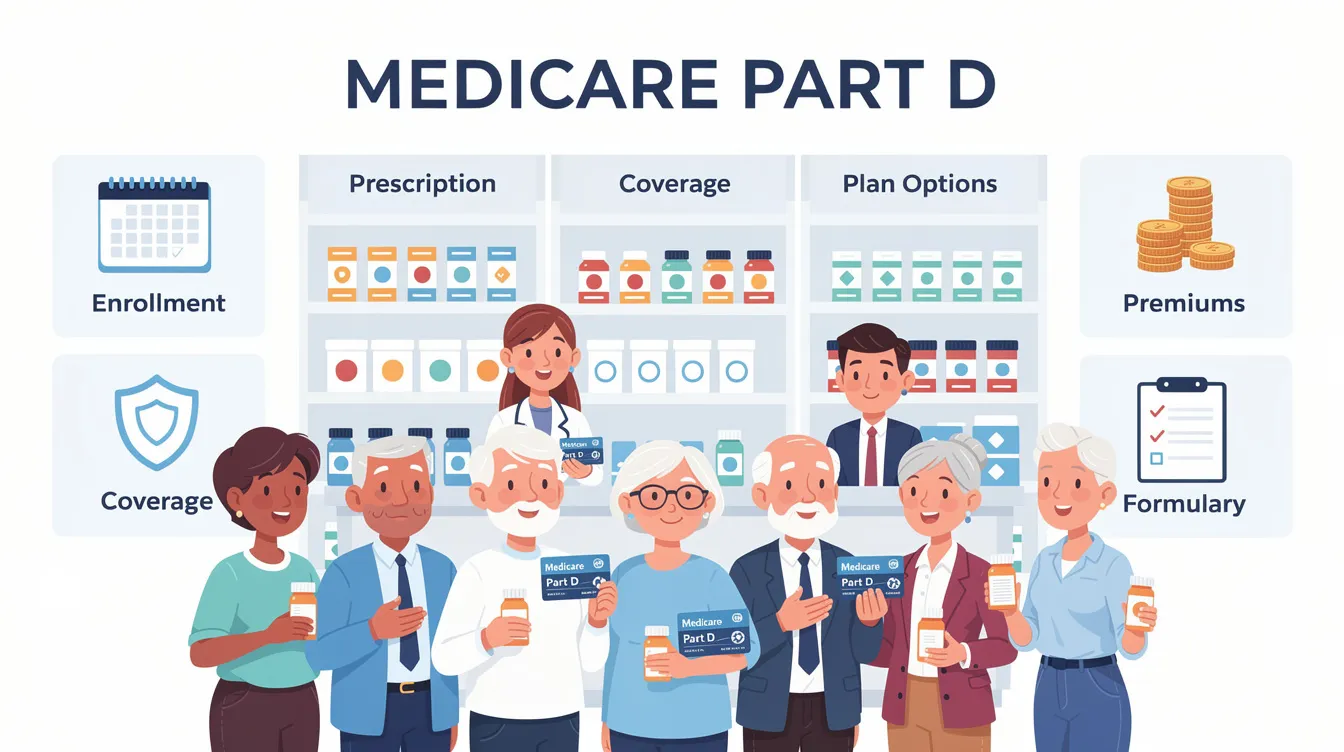
The D late enrollment penalty works differently from Part B but still adds permanent costs. Medicare calculates it by taking 1 percent of the national base beneficiary premium. That figure gets multiplied by the number of full months you went without creditable drug coverage.
Medicare rounds the result to the nearest ten cents and adds it to your monthly Part D coverage premium for life. If you go 24 months without qualifying drug coverage, your monthly penalty equals twice the number of full months you waited times 1 percent of the national base beneficiary premium.
The national base beneficiary premium changes each year, which means your penalty amount can shift too. Avoid gaps in prescription drug coverage by picking up a Part D plan or a medicare advantage plan that includes drug coverage as soon as you are first eligible.
Explore Medicare plan options on our site to compare what fits your situation.
Special Situations That Let You Delay Without Penalty
Not everyone needs to enroll at 65. Special situations allow people to delay signing up without triggering a late enrollment penalty.
If you or your spouse work for a company with 20 or more employees, your group health plan counts as creditable coverage. You can safely delay enrolling in Part B and Part D while that employer coverage stays active. When your spouse stop working or your job-based coverage ends, a special enrollment period gives you eight months to enroll in Part B and two months to add Part D coverage without penalty.
Marketplace coverage does not work the same way. A marketplace plan does not count as creditable coverage for Medicare purposes. People who hold only marketplace coverage past 65 are not protected from late enrollment penalties. Private insurance companies offering individual plans outside of employer-sponsored coverage generally do not qualify either.
Disability also creates special situations. If you receive disability benefits through Social Security for 24 months, you become eligible for medicare before age 65. End-stage renal disease and ALS trigger earlier eligibility as well.
Health Savings Accounts And Medicare: A Timing Issue
If you contribute to a health savings account hsa, you need to stop before medicare coverage begins. Part A hospital insurance can apply retroactively up to six months. New HSA contributions made during that retroactive window can trigger federal tax penalties.
Stop contributions at least six months before your medicare enrollment date to stay safe. This detail catches many people off guard, especially those who are still working and contributing actively to an HSA through their employer plan.
Medicare Advantage Plans And Your Coverage Choices
A medicare advantage plan bundles Part A, Part B, and usually prescription drug coverage through private insurance companies approved by Medicare. Many plans include additional benefits beyond what original medicare covers.
You still need to enroll in Part A and Part B before joining a medicare advantage plan. Choosing a medicare advantage plan does not replace the enrollment obligation or protect you from penalties if you delay. Think of it as a way to receive your medicare benefits, not a way to avoid the enrollment timeline.
Our Medicare Supplement plans are also worth reviewing if you want added protection alongside Original Medicare.
Get Your Free Medicare Timeline Review In Idaho Falls Or Pocatello
We have two Idaho offices where our team will walk through your personal enrollment timeline at no cost to you.
Idaho Falls Office 3744 Woodking Dr Idaho Falls, ID 83404 Phone: (208) 557-1234
Pocatello Office 275 S 5th Ave #155 Pocatello, ID 83201 Phone: (208) 557-1234
Call us, stop in, or reach out through our contact page. We offer free consultations with no obligation.
Do Not Let A Penalty Follow You Into Retirement
The late enrollment penalty does not care why you missed your window. Most people who pay it simply did not know the rules in time. Teton Medicare exists to make sure that does not happen to you.
We are licensed in nine states: Idaho, Utah, Montana, Wyoming, Nevada, Colorado, Arizona, Washington, and Oregon. Whether you need help sorting out your initial enrollment period, understanding employer coverage, or comparing drug plans to avoid a Part D penalty, we are ready to help.
Contact us today or call (208) 557-1234 to schedule your free Medicare timeline review. Skip the guesswork and the lifetime costs.
We proudly serve clients in Idaho, Utah, Montana, Wyoming, Nevada, Colorado, Arizona, Washington, and Oregon.
Frequently Asked Questions
What is the Medicare late enrollment penalty and how long does it last? The late enrollment penalty applies when you miss your enrollment window without creditable coverage. The Part B penalty adds 10 percent to your monthly premium for every 12-month period you delayed. The D late enrollment penalty adds 1 percent of the national base beneficiary premium for each month without qualifying drug coverage. Both penalties are permanent and last for as long as you hold that coverage.
Can I avoid the penalty if I have insurance through my job? Yes, if your employer has 20 or more employees and you are covered under their group health plan. That qualifies as creditable coverage and protects you from penalties. A special enrollment period lets you sign up for Part B and Part D when that employer coverage ends without facing a late enrollment penalty.
Does marketplace coverage protect me from the Medicare late enrollment penalty? No. Marketplace coverage does not count as creditable coverage for Medicare purposes. If you hold only a marketplace plan past age 65, you are not protected from Part B or Part D late enrollment penalties. Most people should transition off marketplace coverage when they first become eligible for medicare.
What is the general enrollment period and when does it run? The general enrollment period runs from January 1 through March 31 each year. It is the fallback option for people who missed their initial enrollment period. Coverage through this period begins July 1, which can create a gap in health insurance and does not eliminate the late enrollment penalty.
How does a health savings account affect my Medicare enrollment timing? Medicare Part A can apply retroactively up to six months. Contributions to a health savings account hsa made during that retroactive window can trigger tax penalties. Stop contributing to your HSA at least six months before your Medicare coverage begins to avoid this issue.